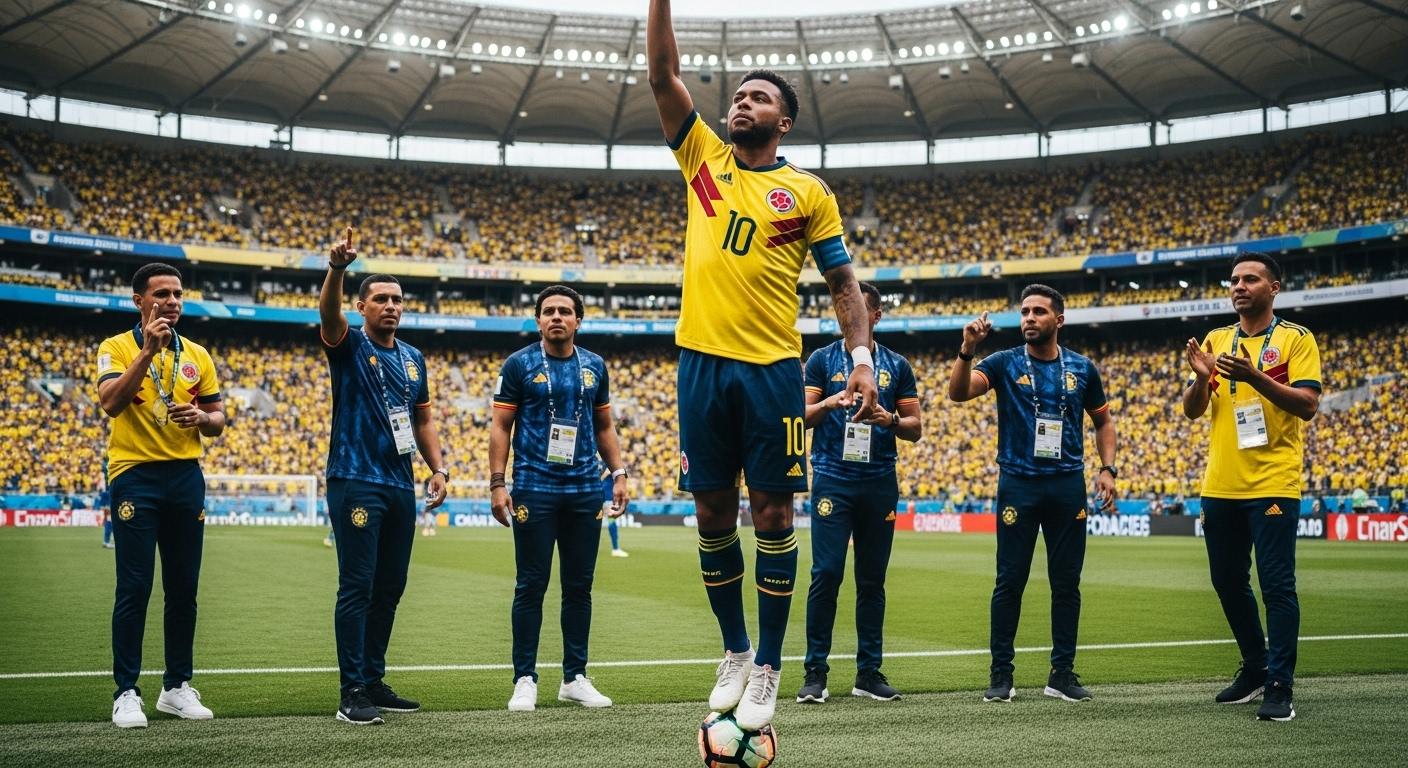
ana Sports Brazil remains a mirror of national appetite for sport, media storytelling, and sponsorship. This analysis unpacks how narratives shape investment.
ana Sports Brazil remains a mirror of national appetite for sport, media storytelling, and sponsorship. This analysis explores how narratives around athletes, leagues, and sponsorships shape public perception and policy, offering a practical view for fans, brands, and decision-makers across Brazil.
Context: Brazil’s sports ecosystem and media representation
Brazilian sport operates as a multi-sport ecosystem where football anchors mass attention but does not wholly define opportunity. Volleyball, basketball, athletics, martial arts, and increasingly esports contribute to a diversified sports culture. In this environment, the media plays a decisive role in deciding which stories rise to prominence, how athletes are framed, and which leagues receive sustained attention. Coverage patterns—ranging from national broadcasts to digital clips on social platforms—create memory hooks that influence sponsorship strategies, youth participation, and the allocation of local resources. When a title in a regional or continental competition is reported as unforgettable, the narrative becomes a reference point that broadcasters, brands, and federations use to justify future investments and policy choices. This dynamic is not unique to football; it extends to emerging sports where visibility is still hard-won but increasingly valuable in a crowded market.
Within this context, the phrasing around achievements—such as a South American title or a breakthrough in a new discipline—becomes more than a headline. It signals what the public expects from athletes, the pace of development, and which demographics are most likely to participate in next-generation leagues. In Brazil, that alignment between performance, media framing, and sponsorship is essential for translating on-field success into durable infrastructure—youth academies, coaching pipelines, and accessible broadcasting that reaches smaller cities as well as metropolitan hubs. The ongoing challenge is to balance narrative spectacle with the longer arc of development, ensuring that early stars do not eclipse systemic needs such as coaching quality, facilities, and equitable access to training resources across regions.
Economic and sponsorship dynamics shaping Brazil’s sports scene
Brazil’s sports economy now hinges on a mix of traditional sponsorship, broadcast and streaming rights, and increasingly data-driven marketing. Local leagues must compete for visibility in a market where football still dominates, but brands recognize the value of diversified portfolios that include women’s sports, youth development programs, and esports. The expansion of streaming and digital platforms has lowered barriers to entry for sponsors seeking direct-to-consumer engagement, enabling tiered sponsorship packages that reach fans in smaller towns while offering measurable metrics around engagement and conversion. This shift also fosters a more granular approach to fan data, allowing clubs and federations to tailor outreach to distinct communities rather than relying on a one-size-fits-all national narrative. Yet the economic reality remains uneven: high production costs for training facilities, travel, and coaching staff contrast with uneven revenue streams from gate receipts, sponsorship, and media rights in smaller markets. The result is a dynamic tension between aspirational storytelling and the practical need for sustainable development pipelines that can scale with fan interest.
Broadcasting deals and sponsorship calendars increasingly favor events with predictable viewership and clear regional impact. In this setting, regional success stories can become catalysts for broader investment, especially when they connect local communities with national identity. The challenge for Brazil’s sports ecosystem is to translate those moments into durable infrastructure—investments in coaching education, youth academies, and affordable access to training—so that rising stars have a realistic pathway from neighborhood courts to national stages. As brands seek return on engagement, there is growing appetite for long-term partnerships that emphasize performance analytics, grassroots participation, and athlete development pipelines rather than short-term hype cycles. The effect is a more mature market where ana Sports Brazil and similar platforms can help frame development as a holistic cycle of performance, media, and community impact.
The role of storytelling in national identity and the ana Sports Brazil narrative
Storytelling in Brazilian sports increasingly blends hero narratives with pragmatic assessments of capacity and opportunity. Media discourse often positions athletes as exemplars of resilience, opportunity, and national pride, shaping fan expectations about what constitutes success in football, basketball, track, and beyond. This narrative work matters because it can drive sponsorship alignment, public funding priorities, and youth recruitment toward disciplines that demonstrate both potential and turnaround capability. However, a narrow focus on star power may obscure structural issues such as regional disparities in access to quality facilities, coaching quality, and the availability of affordable training programs for underserved communities. For ana Sports Brazil and its readership, the task is to foster stories that celebrate achievement while highlighting actionable pathways for systemic improvement—stories that are as concerned with the architecture of sport as with its marquee moments. By threading performance with development, media can help create a sustainable tempo for Brazilian sport that endures beyond the next big win.
In this framing, narratives around players, coaches, and teams are not merely entertainment; they are a form of public policy signaling. When a Brazilian athlete secures a continental title, the coverage should not only laud the victory but also spotlight the training environments, investment cycles, and community programs that made it possible. That approach supports informed fan engagement, encourages responsible sponsorship choices, and fosters accountability among federations and government bodies responsible for sport development. The broader aim is to cultivate a national story where excellence is inseparable from access, equity, and the capacity to translate talent into lasting institutions that empower future generations.
The road ahead: scenario framing for 2026 and beyond
Looking toward 2026 and beyond, Brazil’s sports narrative could evolve along several plausible trajectories, each with distinct implications for policy, investment, and grassroots participation. One scenario emphasizes expanded domestic funding, stronger collaboration between brands and federations, and a pipeline approach that integrates youth academies, schools, and community clubs into a national performance framework. In this scenario, sponsorships become more stable, data-driven fan engagement grows, and the quality of coaching and facilities rises in multiple regions, creating measurable improvements in performance across disciplines.
A second scenario centers on the power of global streaming and sponsorship ecosystems to compress development timelines. Here, Brazilian leagues benefit from better marketing, cross-border talent mobility, and more sophisticated analytics but must guard against overreliance on external revenue that could destabilize local leagues during market downturns. This path requires robust governance, transparent rights management, and targeted investments in grassroots infrastructure to preserve the social value of sport beyond commercial outcomes.
A third scenario emphasizes a stronger emphasis on female athletes and inclusive participation. If federations prioritize women’s leagues, co-ed development programs, and media coverage that normalizes diverse pathways to success, Brazil could accelerate its progress in multiple disciplines and broaden the sport’s social base. Each scenario depends on coordinated action among clubs, federations, sponsors, broadcasters, and government agencies to align incentives with long-term development objectives, rather than chasing short-term wins.
Actionable Takeaways
- Strengthen domestic pipelines by increasing funding for youth academies and accredited coaching programs in underrepresented regions.
- Align sponsorships with long-term development goals, linking brand investment to measurable progress in coaching quality, facilities, and youth participation.
- Expand data-driven storytelling that highlights pathways from community sports to professional levels, not just marquee performances.
- Invest in women’s and mixed-discipline programs to diversify the talent pool and broaden audience reach across Brazil.
- Encourage responsible integration of esports and traditional sports, ensuring cross-pollination of skills, sponsorship expertise, and audience growth while maintaining rigorous governance.