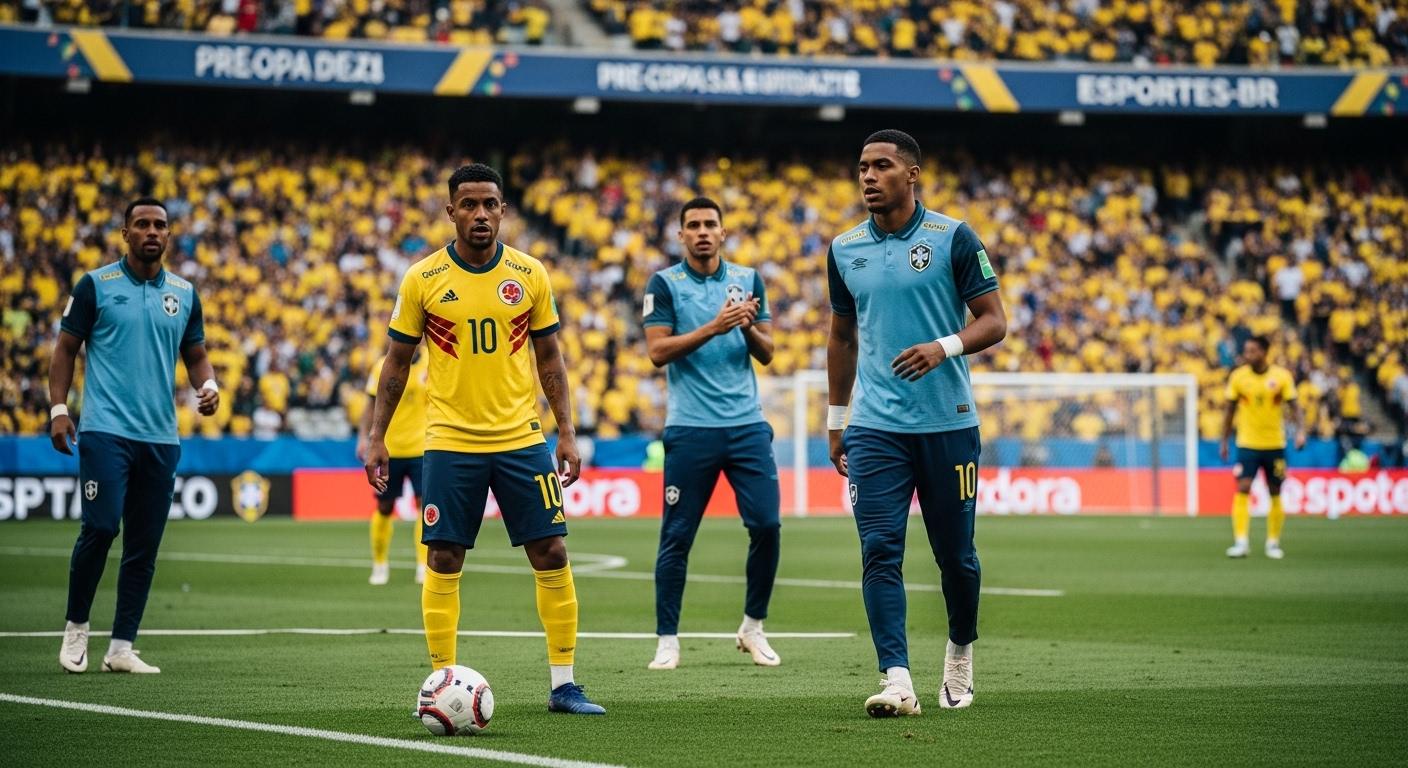
This analysis examines how estadio Sports Brazil could reshape Brazil’s esports landscape by turning stadiums into hybrid venues for competition.
esportes-br.comBrazil sports news and match analysis.
Esports in Brazil: The role of estadio Sports Brazil
Updated: March 16, 2026
Brazil’s sports culture has long placed stadiums at the center of civic life. As audiences increasingly migrate to screens beyond the arena, the idea of turning a stadium into a dedicated esports venue becomes not only an innovation in fan experience but a practical strategy for sustaining large-scale events. The concept of estadio Sports Brazil sits at this crossroads, inviting clubs, sponsors, and municipal planners to reframe how competitive games are produced, broadcast, and remembered.
Context: The Rise of Esports Within Brazil’s Stadium Culture
In the last decade, Brazil has emerged as a key player in global esports, with streaming crowds, local leagues, and academy programs fueling development across genres from competitive narrative titles to team-based shooters. Esports events in stadiums are less about moving a crowd from stands to seats and more about blending ritual spectacle with broadcast-grade production. When a game is staged on a floor that used to host a football match, the audience shifts from a purely passive view to an immersive experience that leverages stadium video boards, surrounding audio, and broadcast suites. The stadium becomes a multi-purpose stage where fans can participate through interactive activations, merchandise, and in-seat replays that mimic traditional sports broadcasts.
Infrastructure and the Stadium Question
The practical challenge is not merely logistics; it is the reliability of the digital backbone. For a stadium to function as a true esports venue, it must deliver high-capacity, low-latency internet, robust power systems, and broadcast-friendly spaces for production crews, commentators, players, and staff. This requires fiber-led connectivity, failover networks, and secure data rooms that can support live streams and real-time analytics. The architectural question is how to preserve sightlines for spectators while creating a stage that accommodates streaming cameras, rigging, and lighting without compromising safety or comfort. In many cities, retrofitting older arenas will demand careful planning and phased investment, complemented by partnerships with tech vendors and local network operators. The payoff is a venue that can host back-to-back events with the energy of a championship weekend while maintaining the quality expected by national broadcasters and online audiences.
Future Scenarios for estadio Sports Brazil
Looking ahead, stadium-based esports in Brazil could unfold along several plausible paths. In one scenario, clubs and municipalities embrace hybrid arenas, where football matches and esports events share the same facility with interchangeable configurations, creating a steady calendar of events and diversified sponsorship. A second scenario centers on partnerships between leagues, clubs, and tech companies to build localized hubs in regional capitals, expanding access to high-speed internet and training resources. A third scenario hinges on governance and public policy, with city governments prioritizing stadium upgrades that serve both sport and digital entertainment, leveraging tax incentives and incentives for creative economies. A fourth scenario considers the potential risks: if capital is unevenly distributed or if events become too dependent on marquee sponsors, there could be an imbalance between fan experience and community development. The most resilient model blends long-term venue strategy with community programs, ensuring that the estadio Sports Brazil concept benefits amateur players and casual fans as well as professionals.
Actionable Takeaways
- Invest in modular stadium infrastructure that supports fixed and mobile esports stages, with scalable seating and flexible sightlines.
- Create sponsorship packages that combine in-venue activations, digital interactivity, and broadcast rights, aligning brands with both sport and esports narratives.
- Develop community programs and youth academies to grow local talent and sustain audience interest beyond high-profile events.
- Prioritize robust, secure, and low-latency network infrastructure, with clear contingency plans for outages during live broadcasts.
- Coordinate with broadcasters and streaming platforms early to ensure production workflows, data rights, and accessibility are optimized for hybrid events.
Source Context
From an editorial perspective, separate confirmed facts from early speculation and revisit assumptions as new verified information appears.
Track official statements, compare independent outlets, and focus on what is confirmed versus what remains under investigation.
For practical decisions, evaluate near-term risk, likely scenarios, and timing before reacting to fast-moving headlines.